

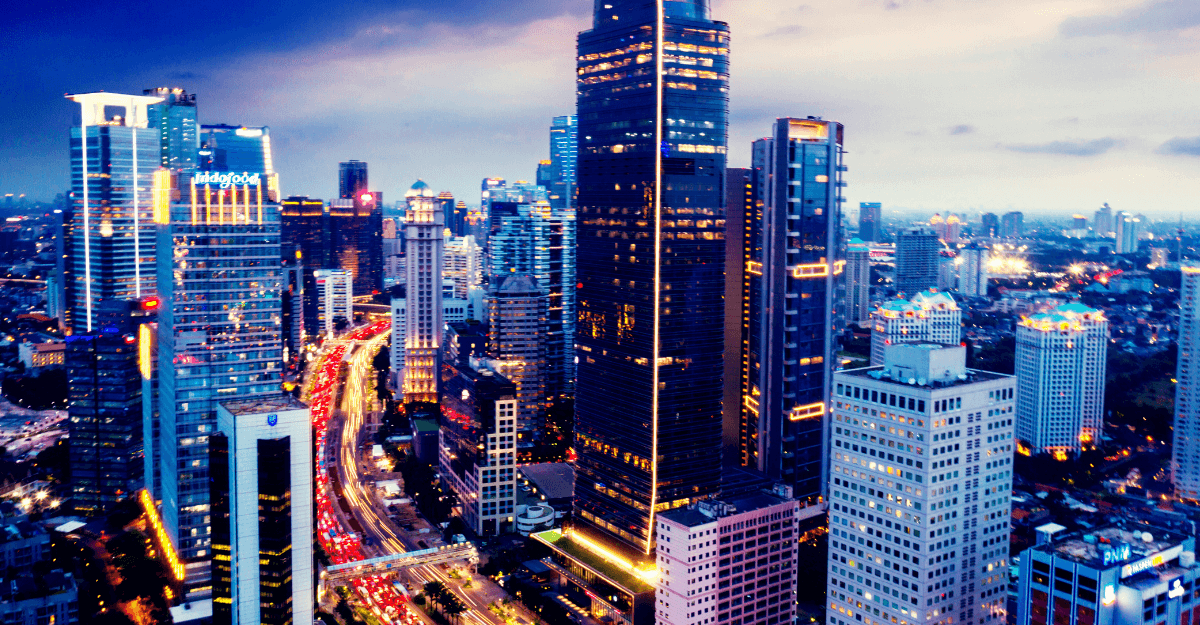
Megacities are among the most influential urban areas in the world. They bring together millions of people, businesses, transportation networks, housing, universities, cultural institutions, and major economic activity within large metropolitan regions.
But what exactly makes a city a megacity? Is every major city in the United States, Canada, or the United Kingdom considered a megacity? And how are these enormous urban areas expected to change in the coming decades?
The answers are not always as simple as looking at a city’s population within its official municipal boundaries. International organizations often measure urban agglomerations, which can include the continuously built-up city and surrounding urban areas.
According to the United Nations’ World Urbanization Prospects 2025, a megacity is an urban area with 10 million or more inhabitants. The UN identified 33 megacities worldwide in 2025, compared with eight in 1975. It projects that the number could reach 37 by 2050.
What Is a Megacity?
A megacity is generally defined as an urban area with at least 10 million inhabitants.
The population threshold is important because the term is not simply another word for a large city. A city can have several million residents and still be considered a large city rather than a megacity.
The United Nations uses population estimates for urban areas and major urban agglomerations to make international comparisons. Its 2025 classification places cities with 10 million or more inhabitants in the megacity category.
This distinction also explains why population figures for the same city can look different depending on the source. One organization might count residents inside administrative boundaries, while another might measure the wider urban agglomeration.
How Many Megacities Are There in the World?
The United Nations identified 33 megacities in 2025.
More than half are located in Asia, which has 19 of the world’s 33 megacities. Latin America has five, Africa has four, Europe has three, and Northern America has two.
The number of megacities has increased substantially over time:
- 1975: 8 megacities
- 2025: 33 megacities
- 2050 projection: 37 megacities
The growth reflects the broader expansion of urban populations around the world. The UN reports that cities were home to 45% of the world’s population in 2025, compared with 20% in 1950.
However, megacities are not the only important part of global urban growth. The UN also notes that small and medium-sized cities collectively house more people than megacities and are growing faster in many regions.
What Are the Megacities in the USA?
The United States has two urban areas that meet the UN’s 10-million-person megacity definition in its 2025 data:
- New York City urban area
- Los Angeles urban area
These should be understood as large urban agglomerations rather than simply the populations inside the official city limits.
New York City
New York is one of the world’s most important urban and economic centers.
Its wider metropolitan and urban region connects large numbers of residents, businesses, financial institutions, transportation systems, universities, cultural organizations, and international companies.
The city is particularly important in areas such as:
- Finance
- Media
- Technology
- Real estate
- International business
- Tourism
- Higher education
- Arts and entertainment
New York’s influence extends well beyond the five boroughs. The wider urban area includes connected communities across the surrounding region, which is one reason international population measurements can differ from the population reported for New York City itself.
Los Angeles
Los Angeles is the second U.S. urban area identified among the world’s megacities in the UN’s 2025 data.
The Los Angeles region is known for its major role in:
- Entertainment
- Film and television
- International trade
- Technology
- Manufacturing
- Tourism
- Creative industries
Its urban development also illustrates one of the major characteristics of very large cities: population and economic activity can extend across many municipalities rather than being concentrated inside one city government.
Are There Megacities in Canada?
Canada has several major metropolitan areas, but the country does not have a megacity under the UN’s 10-million-inhabitant definition in the 2025 data.
Toronto is Canada’s largest urban center and an important international city, but it does not reach the 10-million threshold used for the megacity classification.
Other major Canadian urban areas include:
- Montreal
- Vancouver
- Calgary
- Edmonton
- Ottawa-Gatineau
These cities are economically and culturally significant, but being a major metropolitan area does not automatically make a city a megacity.
Toronto
Toronto is particularly important to Canada’s economy and population.
The wider Toronto metropolitan region has a large and diverse population and plays a major role in:
- Finance
- Technology
- Business services
- Immigration
- Education
- Culture
- Real estate
- International commerce
Because Toronto is large but below the 10-million threshold used by the UN, it is more accurate to describe it as a major metropolitan area rather than automatically calling it a megacity.
Is London a Megacity?
Yes. London is included among the world’s megacities in the United Nations’ 2025 data.
London is one of Europe’s most internationally connected urban centers and has a major role in finance, business, tourism, education, media, technology, and culture.
Like New York and Los Angeles, London’s urban population is not limited to the administrative boundaries of the City of London.
In everyday language, people often use “London” to refer to the much larger urban area surrounding the historic core. Population estimates therefore depend on exactly what geographical boundary is being measured.
What About Other Large UK Cities?
The United Kingdom has several large and influential cities, including:
- Birmingham
- Manchester
- Glasgow
- Liverpool
- Leeds
- Edinburgh
- Bristol
However, they do not meet the UN’s 10-million-person threshold for megacities in the 2025 classification.
This highlights an important point: a city’s economic importance and its population size are not the same thing.
Manchester, for example, is a major economic and cultural center, but its status as an important city does not make it a megacity under the 10-million definition.
Why Are Megacities Growing?
Several factors contribute to the growth of major urban areas.
Population Growth
Natural population growth can increase the number of people living in urban areas.
Migration
People may move toward cities because of employment, education, healthcare, housing opportunities, or other services.
Economic Opportunities
Large cities tend to attract businesses and workers because they offer access to customers, employees, infrastructure, financial services, and professional networks.
Transportation
Roads, railways, airports, and public transportation systems allow large urban regions to connect multiple communities.
Expansion of Urban Areas
A city does not necessarily grow only by adding residents inside its existing boundaries. Nearby towns and communities can become increasingly connected to the central urban area as development expands.
This process can create a much larger metropolitan or urban agglomeration.
What Makes a Megacity Different From a Large City?
Population is the simplest distinction.
Under the UN definition used in its 2025 urbanization analysis:
| City classification | Population |
|---|---|
| Medium city | 1 million to under 5 million |
| Large city | 5 million to under 10 million |
| Megacity | 10 million or more |
The UN’s classification is based on urban population rather than the reputation or economic importance of a city.
That means a city can be extremely wealthy, politically important, or internationally famous without being a megacity.
Why Do Megacity Population Numbers Differ?
You may see different population figures for the same city across different websites.
This usually happens because researchers may be measuring different geographic areas.
For example, there is a difference between:
City proper:
The population within official municipal boundaries.
Metropolitan area:
A broader region connected economically and socially to the central city.
Urban agglomeration:
A continuously developed urban area that can cross administrative boundaries.
The United Nations’ World Urbanization Prospects uses a harmonized approach for international comparisons, while also providing data based on national definitions.
This is why a population number should always be considered together with its geographic definition and source.
What Are the Benefits of Living in a Megacity?
Living in a very large urban area can provide access to a wide range of opportunities.
Employment
Large urban economies often contain many industries and employers, giving workers access to different career paths.
Education
Megacities frequently contain universities, colleges, research organizations, professional schools, and specialized training institutions.
Healthcare
Large populations can support extensive healthcare networks and specialized medical facilities.
Cultural Diversity
Large cities often bring together people from different backgrounds, languages, and cultures.
Transportation Connections
Major urban areas generally have extensive road, rail, airport, and public transportation networks.
Business Opportunities
A large concentration of consumers and businesses can create opportunities for entrepreneurs, retailers, service providers, and technology companies.
What Challenges Do Megacities Face?
Rapid urban growth can also create significant challenges.
Housing Costs
High demand for housing can place pressure on rents and property prices, particularly in desirable neighborhoods.
Traffic
Large populations create substantial demand for transportation. Without sufficient public transit and road capacity, congestion can become a major problem.
Infrastructure
Cities must continually maintain and expand water systems, electricity networks, roads, public transportation, schools, hospitals, and other infrastructure.
Pollution
High levels of transportation, construction, industry, and energy consumption can contribute to air and environmental pollution.
Inequality
Economic growth does not necessarily benefit every resident equally. Large cities can contain high-income neighborhoods alongside communities experiencing poverty or limited access to services.
Climate Risks
Large concentrations of people and infrastructure can increase exposure to climate-related risks, including extreme heat, flooding, storms, and other hazards.
The UN’s urbanization research emphasizes the importance of resilient and sustainable urban development as cities continue to grow.
Read Also: Coyyn.com Guide
How Do Megacities Affect the Economy?
Megacities can have economic influence far beyond their geographical boundaries.
A large urban economy brings together:
- Workers
- Consumers
- Businesses
- Investors
- Universities
- Transportation networks
- Financial institutions
- Technology companies
- Government agencies
This concentration can encourage innovation and business activity.
For example, New York has a major international financial role, London is a major global business and financial center, and Los Angeles has significant influence in entertainment, trade, technology, and creative industries.
The economic importance of a city, however, should not be confused with its population classification.
How Does Technology Change Megacities?
Technology is becoming increasingly important in managing large urban populations.
Cities can use technology for:
- Traffic management
- Public transportation
- Energy management
- Waste collection
- Emergency response
- Digital government services
- Environmental monitoring
- Public safety
- Urban planning
Smart-city technologies can help governments collect and analyze information about how infrastructure and public services are being used.
However, technology alone cannot solve every urban problem. Effective planning, investment, public policy, and community participation remain important.
Are Megacities Better Than Smaller Cities?
There is no universal answer.
Megacities can offer employment, education, culture, transportation, and business opportunities that may be difficult to find elsewhere.
At the same time, they can experience high housing costs, congestion, pollution, crowded infrastructure, and other challenges.
Smaller cities can provide different advantages, including shorter travel distances, lower population density, and potentially lower living costs, although these factors vary significantly by location.
The UN’s latest urbanization research also shows that smaller and medium-sized cities remain extremely important globally. Megacities receive considerable attention because of their size, but they are not the only places where urban growth is occurring.
What Will Megacities Look Like in 2050?
The number of megacities is expected to continue increasing.
The United Nations projects that the number of urban areas with at least 10 million inhabitants could rise from 33 in 2025 to 37 by 2050.
Several cities are projected to cross the 10-million threshold during that period, including Addis Ababa, Dar es Salaam, Hajipur, and Kuala Lumpur.
The geographic pattern of urban growth is also important. More than half of the world’s megacities are already located in Asia, while Africa is expected to experience substantial urban growth in coming decades.
For the USA, Canada, and UK, the story is somewhat different. Their major urban areas already have mature infrastructure and established economies, while population growth patterns can vary considerably between metropolitan regions.
Megacities in the USA, Canada and UK at a Glance
| Country | Examples of major urban areas | Megacity status under UN 2025 definition |
|---|---|---|
| United States | New York, Los Angeles, Chicago, Houston | New York and Los Angeles meet the 10M threshold |
| Canada | Toronto, Montreal, Vancouver, Calgary | No Canadian urban area meets the 10M threshold |
| United Kingdom | London, Manchester, Birmingham, Glasgow | London meets the 10M threshold |
This table uses the United Nations’ 2025 urban-area classification rather than simply comparing populations inside municipal boundaries.
https://www.un.org/development/desa/pd/file/1942
Frequently Asked Questions About Megacities
What is a megacity?
A megacity is an urban area with 10 million or more inhabitants under the definition used by the United Nations.
How many megacities are there in 2025?
The United Nations identifies 33 megacities worldwide in 2025.
How many megacities are in the USA?
The United States has two megacities in the UN’s 2025 classification: New York and Los Angeles.
Does Canada have a megacity?
Canada does not have a 10-million-plus megacity under the UN’s 2025 classification. Toronto is the country’s largest major urban center but remains below that threshold.
Is Toronto a megacity?
Toronto is a major metropolitan area, but it does not meet the UN’s 10-million population threshold for a megacity in the 2025 classification.
Is London a megacity?
Yes. London is included among the world’s megacities in the UN’s 2025 data.
Is New York a megacity?
Yes. The New York urban area meets the United Nations’ 10-million population threshold used for megacities.
Is Los Angeles a megacity?
Yes. Los Angeles is included among the world’s megacities in the UN’s 2025 classification.
What is the largest megacity in the world?
According to the UN’s 2025 estimates, Jakarta is the world’s most populous city, with nearly 42 million inhabitants, followed by Dhaka and Tokyo.
Will there be more megacities in the future?
The UN projects that the number of megacities could increase from 33 in 2025 to 37 by 2050.
Why do megacity population figures vary?
Population figures can differ because sources may measure city boundaries, metropolitan areas, or wider urban agglomerations. The geographic definition should always be checked before comparing figures.
Final Thoughts
Megacities represent one of the most visible aspects of global urbanization. They concentrate large populations, businesses, infrastructure, transportation networks, and cultural activity within interconnected urban regions.
For readers in the USA, Canada, and UK, the concept is particularly relevant when looking at cities such as New York, Los Angeles, London, and Toronto. However, population size alone does not tell the complete story of a city.
New York, Los Angeles, and London meet the UN’s 10-million threshold for megacities in its 2025 classification, while Toronto and other major Canadian and British cities remain below that threshold.
As urban populations continue to change, the biggest question will not simply be how many people live in a city. It will also be how effectively cities can provide housing, transportation, infrastructure, economic opportunities, public services, and resilient environments for the people who depend on them.
Megacities are therefore more than enormous population centers. They are complex urban systems that can influence national economies, regional development, technology, culture, and the way millions of people live and work.
[…] Read Also: Everything You Wanted to Know About Megacities […]
[…] You may also read: Everything You Wanted to Know About Megacities […]
[…] You may also read: Everything You Wanted to Know About Megacities […]
[…] You may also read: Everything You Wanted to Know About Megacities […]
[…] You may also read: Everything You Wanted to Know About Megacities […]